

The first hard freeze of the year always catches the same people: the ones whose gloves live in a drawer, not on the hook. I know. I once bought a ‘statement’ coat I wore exactly twice, and my hands paid for it.
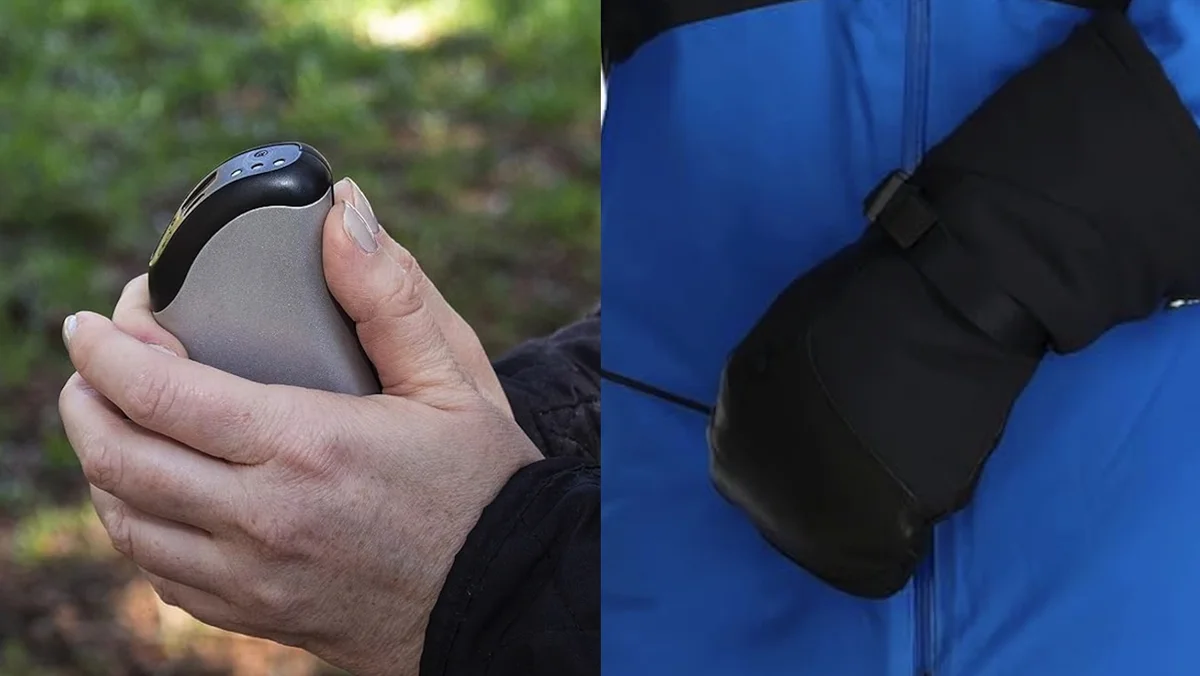
Here’s the thing nobody tells you about gloves: they’re not one category. A thin touchscreen glove won’t save a wet-snow day, and a waterproof mitt won’t let you check the subway app without freezing. So I stopped shopping ‘gloves’ as a single line item and started sorting by the actual job — commuting, layering, wet conditions, outdoor work, and pocket heat. Five picks, in that order. Nothing below is a sponsored placement, and I’d rather be honest than hype it.
1. The North Face Etip Recycled Gloves — the daily-commute pair
If your main mission is walking to the train, answering a text, and not looking like you’re in costume, this is the pair. The North Face Etip Recycled Gloves are fleece-based, four-way stretch, and built for chilly, dry conditions — not snow or slush.
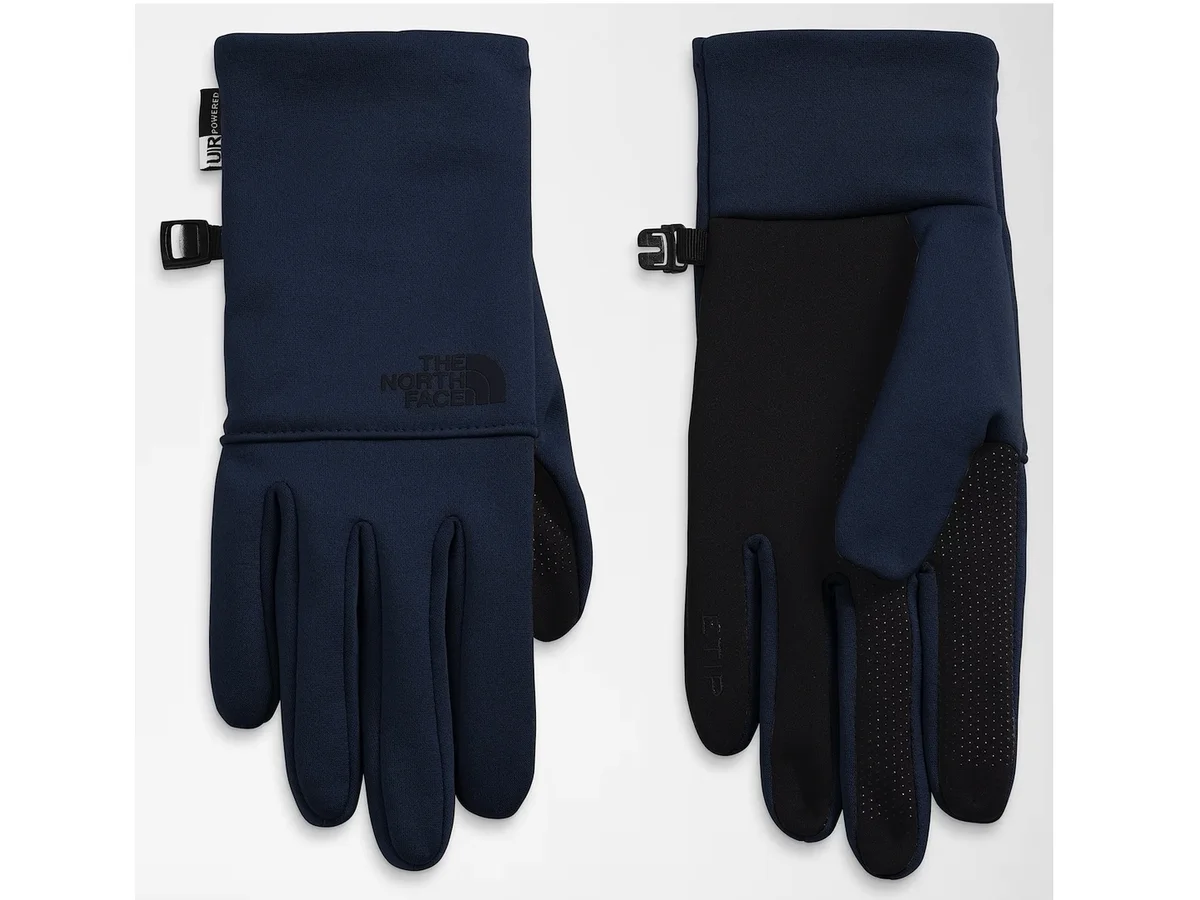
The details that actually matter in an edit: Etip touchscreen-compatible fingertips, so you check your phone without peeling a glove off, silicone grip dots on the palm, and a fabric made with 93% recycled polyester. That last one is a quiet win for a closet that tries not to waste. $50, available on Amazon.
My honest take: buy these for fall and early winter, for days when low bulk beats maximum warmth. Don’t reach for them to shovel a driveway — that’s a different glove’s job.
2. Seirus SoundTouch Heatwave Glove Liner — the layer that does two jobs
Layering is the cheapest upgrade in cold-weather dressing. The Seirus SoundTouch Heatwave Glove Liner is a four-way-stretch liner with touchscreen-compatible fingertips and what Seirus calls Heatwave lining, designed to reflect and retain body heat. Fair enough — that’s a manufacturer claim, not a lab result, and I treat it as such.
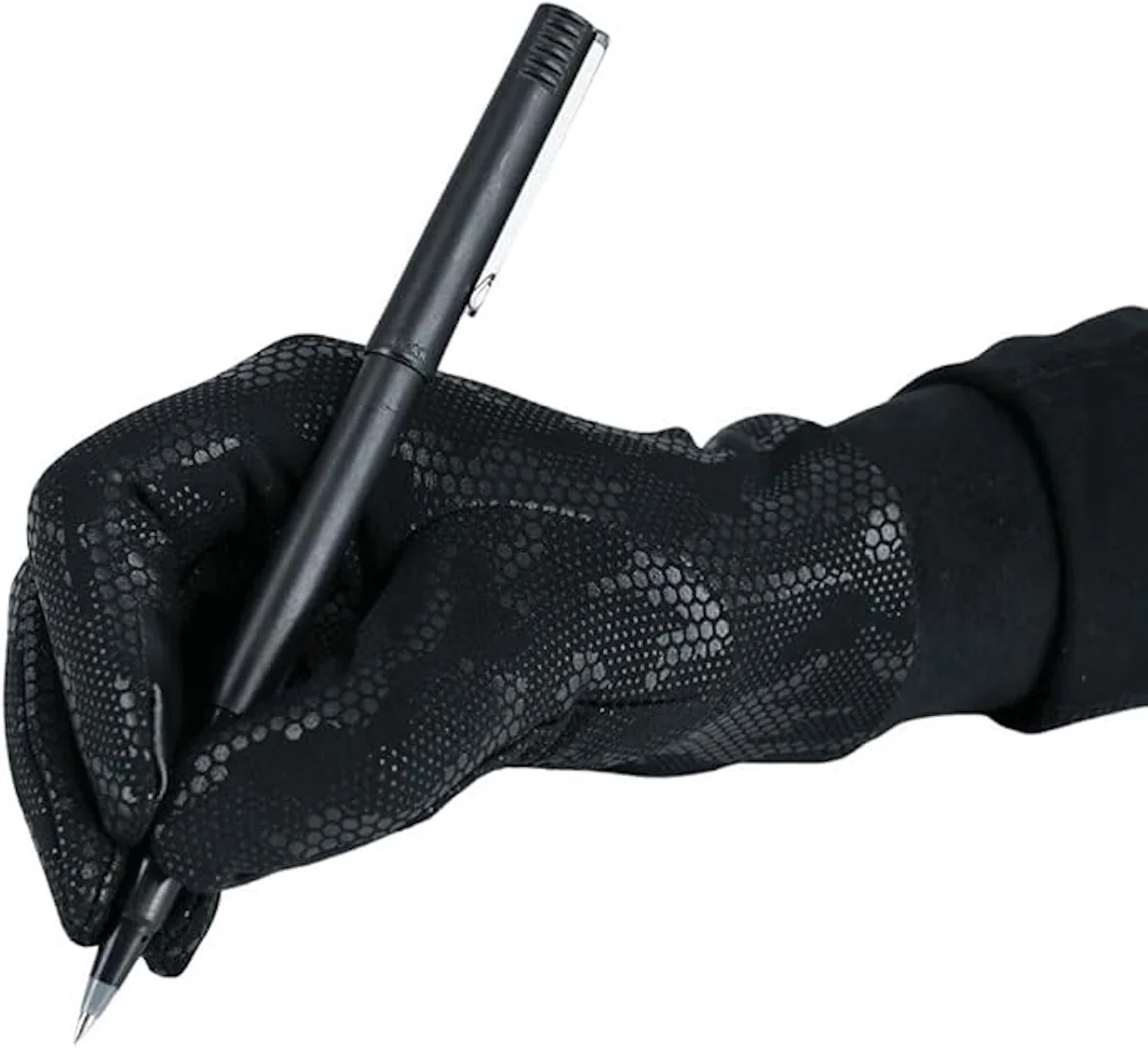
The real value is the system: wear it alone on a mild fall morning, then slide it under a shell glove when the wind picks up. Your phone stays accessible, and you’re not choosing between warm and useful. $29.99 from Seirus. It’s not a substitute for a waterproof winter glove — if you already own one, this is the piece that makes it smarter.
3. Outdoor Research Carbide Sensor Mitts — for wet snow and resort days
Wet hands lose heat fast, which is why, on true winter days, waterproofing matters more than an extra ounce of insulation. The Outdoor Research Carbide Sensor Mitts are positioned exactly there: skiing, snowboarding, chairlifts, and repeated contact with wet gear.
Outdoor Research lists a waterproof, breathable GORE-TEX insert, 200-gram VerticalX Eco insulation, a goat-leather palm, touchscreen-compatible fingertips, and a cinchable gauntlet. The gauntlet is the detail I’d flag — it keeps snow out at the cuff, which is where most gloves quietly fail. The leather palm is built for grip on poles and gear. $57.67 on Amazon.
Mitts trade some finger dexterity for a shared compartment that holds warmth better. If your winter includes a resort trip, that trade is the right one. For a low-bulk commute, it’s not the pick.
4. Carhartt Waterproof Insulated Gloves — the workhorse nobody styles
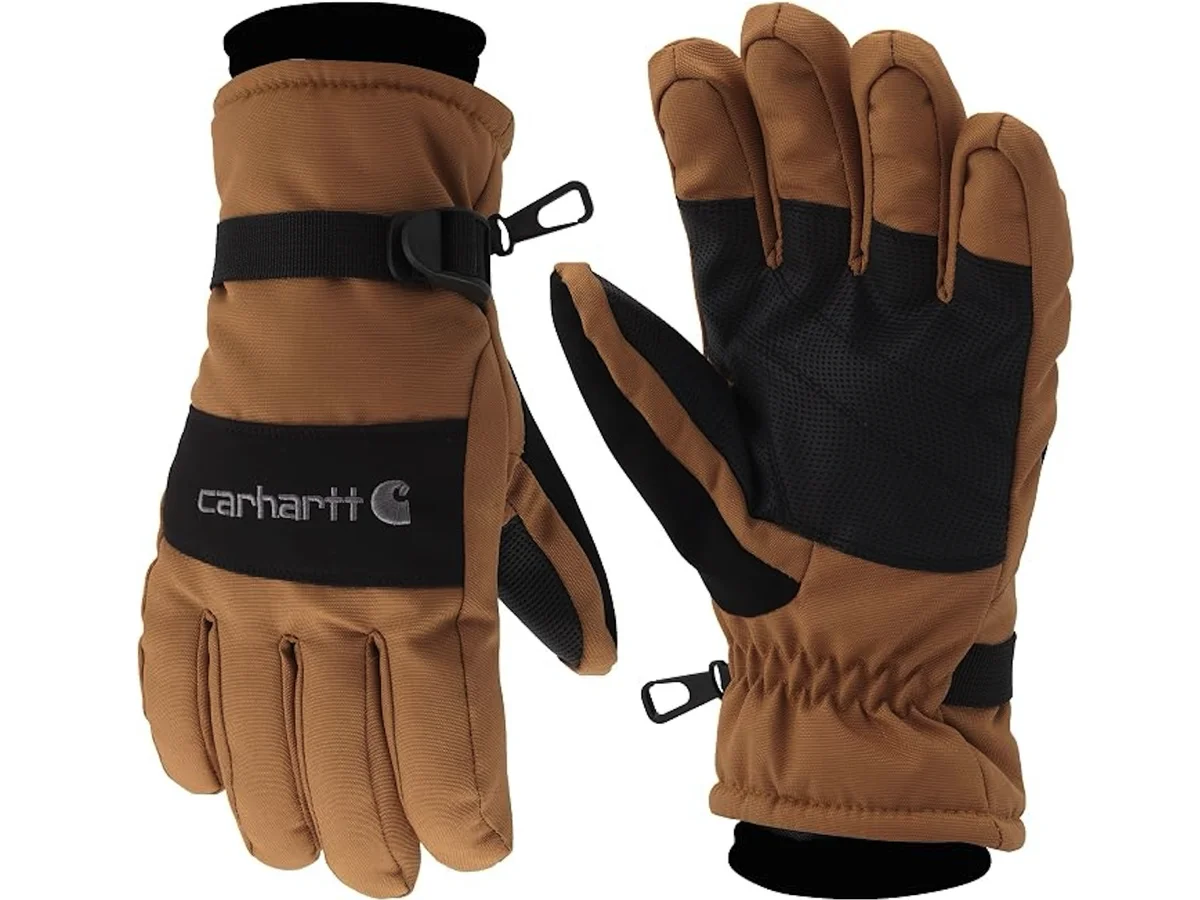
Not technical, not photogenic, and exactly the point. The Carhartt Waterproof Insulated Gloves are the work-oriented choice here: outdoor chores, dog walks, clearing snow, anything where grip and durability beat looks. A waterproof insert, durable shell, grippy palm, adjustable wrist strap, and a soft fleece cuff. The wrist closure is the quiet hero — it keeps snow and slush out, which is the whole game in wet cold. $34.99 on Amazon.
If your hands spend their winter outside the office, these earn their place. If you’re mostly in a car and on a sidewalk, skip them and keep your budget for the pieces you’ll actually show.
5. Zippo HeatBank 9s — rechargeable pocket heat
Gloves solve wind and moisture. They don’t solve standing still in a cold wind at a game or a bus stop. That’s a different tool: the Zippo HeatBank 9s, a rechargeable hand warmer with dual-sided heating. One unit, not a pair — it goes in a coat pocket and works for both hands in turns.
What Zippo lists: six heat settings, a maximum operating temperature of 120 degrees Fahrenheit, a 5,200mAh rechargeable lithium-ion battery, and up to nine hours of runtime. It also doubles as a USB power bank, which is the detail that makes it feel like a small investment rather than a gadget — your phone gets a top-up when you’re away from an outlet. $50.95, on Amazon and Rei.
Two honest caveats, because I’d rather flag them than have you learn them the hard way: those temperature and runtime figures are manufacturer claims, and the maximum heat and longest runtime won’t happen at the same time. And it’s supplemental — it won’t keep your hands dry or replace proper gloves for cycling or snow. Follow Zippo’s instructions when you use and charge it.
The Edit
My rule for cold-weather hands: one light touchscreen glove for daily wear, one waterproof outer layer for wet days, and a pocket warmer for long waits. You don’t need all five from above — you need the two or three that match your actual life. That’s the edit. The rest is noise.
FAQ
Can I use touchscreen gloves for everything?
No. They’re for dry, cool conditions — commuting, errands, travel. For snow and rain you want a waterproof shell, and the touchscreen feature matters less when your main problem is wet, not frozen.
Do I need a glove liner if I already own a winter glove?
Usually yes, and it’s the cheapest upgrade in this list. A liner lets you adjust warmth without swapping entire gloves, and it keeps your phone usable while you wear a heavier shell.
Is a hand warmer just a novelty?
Not if you spend real time standing outside. The Zippo HeatBank 9s is a supplemental tool — it won’t replace gloves — but the USB power-bank function is genuinely useful if you’re away from outlets a lot.
A note from Margot
I spent ten years editing magazine racks. Now I edit your closet — and I promise, you already own half of what you need for winter. Start with the job your hands actually do, and the rest takes care of itself.