
My job is clothes. I spend my days hunting down the best jeans, testing new brands, styling outfits for other people to wear. And yet I can’t stand clutter.
A closet full of things I never reach for stresses me out more than an empty one. So a few years ago I hired professional organizers to tackle the two rooms I could never keep tidy — my closet and my office. That’s when the capsule wardrobe stopped being a trend I’d read about and became the system I actually shop by.
Here’s the short version, because I know you’re already wondering: a capsule wardrobe is a small set of mix-and-match pieces you wear over and over. Not a punishment. Not beige purgatory. Just fewer things that all work together, so you get more outfits from less.
The part most people get wrong
I used to think a capsule meant as few pieces as possible in as neutral colors as possible. If you do too, this is the sentence I need you to hear:
A capsule is designed to give you more outfit options with fewer items.
And what works as a capsule at one stage of life doesn’t work at another. What I wore in my 20s is nothing like what I wear now, and a capsule for a busy parent looks nothing like one for someone whose life is mostly office days and client dinners. There’s no one-size-fits-all formula. It’s about being thoughtful with what you buy and keep.
I lean toward timeless pieces and slow fashion brands because I want to keep items for years — I’d much rather own fewer pieces I wear constantly than a bunch of trendy items I get sick of in a month. But you can absolutely build a capsule on a budget, and you can absolutely work patterns and bright colors into yours. I’ve included pieces at multiple price points below, from the affordable to the worth-the-investment.
Why bother at all?
Because it makes getting dressed simple. Everything works together, so you stop second-guessing what goes with what. Fewer decisions in the morning, more outfits from fewer pieces.
And the cost-per-wear goes down. That’s the number I care about most. You’re wearing the same things over and over instead of buying stuff that looked good in the store and never gets worn at home. One well-made piece worn a hundred times beats ten cheap ones worn twice.
It also means you don’t start from scratch every season. I used to buy random pieces in summer, then hit winter and feel like my only options were jeans and a sweater — so I ended up with a million sweaters. A capsule gives you a solid foundation year-round. You add a few seasonal pieces, but you’re not rebuilding the whole thing.
It also forces you to be intentional. If you’re going to own something, it better work with what you already have. I learned that the hard way. I flew to Utah for two days and unexpectedly extended the trip. I’d packed so light that when I had to stay longer, I ran out of outfits and was stuck mixing and matching what was in my suitcase. Some combinations worked better than I wanted, but most did — and it made me realize I’d built a capsule wardrobe without meaning to. I just needed to mix things up more often to get more outfits out of it.
And if you prefer bolder pieces or more color, include them. The point is that everything you own should feel like you and work with the majority of what else is in your closet.
How many pieces is a capsule, actually?
Around 25 to 40 pieces, give or take. The number is flexible and depends on your life. You’re an adult; there’s no capsule wardrobe police. You make the rules.
The internet loves the “10-piece capsule” article because the headline is catchy. But ten pieces don’t account for shoes, accessories, or the fact that you need options for different occasions. You need something for work, something for the weekend, something for a date night, and layers for different seasons. Ten items just isn’t realistic for most of us.
What really matters isn’t the count. It’s whether everything works together, whether you actually wear it, and whether it feels practical for the stage of life you’re in. If you build your capsule and get to 50 pieces and everything works and you’re wearing it all, then 50 is your number. Some people are comfortable with fewer; some need more because their lifestyle demands it.
How to build one, step by step
Building a capsule doesn’t have to be complicated. It’s about being honest about what you need. Here’s how I approach it.
1. Start with real life, not Pinterest
Look at what you’re already wearing the most — the pieces that feel like defaults, the outfits you reach for on autopilot. Notice the combinations that happen naturally. That’s the foundation of your capsule, and it tells you how casual or tailored it will be.
This is where most capsule guides get it wrong. They show you aspirational outfits and tell you to build toward that. But your capsule needs to work for the life you have right now, not the one in the magazine spread.
Working from home looks different from commuting to an office. Kids and playground time mean different pieces than a life of work events and date nights. Constant travel changes things compared to staying put. I built mine around what I actually do every day: family life, some work events, weekends, the occasional date night. I’m not dressing for nightlife or a corporate job I no longer have.
2. Note the gaps you keep hitting
Pay attention to what you wish you had when you get dressed. I realized I didn’t have a nicer flat to wear with jeans on errand runs — no sneakers, no loafers, nothing in between. So I added a pair of Greta Mary Jane flats and never looked back.
Maybe you don’t have a day dress for when you’re meeting friends for lunch. Make a note. Or maybe you don’t have a shirt that works when you need to look put-together for a meeting; a button-down would be an easy addition. Over time, you’ll identify the true gaps in your closet — the ones you’ve been working around, not the one a trend column told you to want.
3. Pick a color palette that actually mixes
A lot of people assume a capsule has to be all beige and gray. It doesn’t. What you do need is a palette where things mix and match together.
The neutrals I actually wear are gray, navy, black, brown, and white. On top of that I add pops of color I like to wear often — a green, a deep red. Those count as “pops” to me. But if you wear red all the time and it makes you feel like yourself, then red can absolutely be one of your core colors. The key is that your base colors work with each other, and any accent you choose matches those neutrals. You don’t want to end up with a hot pink piece and a burnt orange piece that don’t mesh with anything else you own.
4. Choose your core categories
Now you get specific. The categories you’re building are tops, bottoms, layers, at least one dress, and shoes. Look at what you do every day and what you wear most often, then fill each category with pieces that genuinely work in your life. For me that means basics like a white tee, a striped tee, a button-down, a tank, and a couple of sweaters for tops; jeans, trousers, tie-waist pants, and shorts for bottoms; a blazer and a cropped jacket for layering; a couple of dresses that cover different occasions; and shoes for different activities.
5. Get rid of what you don’t wear
Once you know your core pieces, go through the closet and find the things you never put on. Get rid of them. Cleaning out my closet is literally one of my favorite activities — there’s a specific kind of quiet joy in it that I won’t fully explain to you.
Donate what you can, or consign pieces that still have value to earn money toward the gaps you’ve started noting. Then stop shopping. This is where the capsule actually becomes useful: you don’t need to constantly add. You fill the gaps, and then you’re done. If something wears out and you need something new, you replace it — but you’re not always shopping just to shop.

The core list, category by category
Below is the foundation of my own wardrobe — the exact categories and the specific pieces I own and wear, with my honest take on each. Prices range from affordable to investment, so there’s something at every level.
Tops
A white button-down. To me this is the backbone of a capsule — you need at least one that fits you well. I own two: the Frank & Eileen relaxed button-down, which feels more lived-in and oversized, and the Quince tailored button-down, which I don’t stress out as much about if I’m parenting my feral boys while wearing it. I wear both constantly. It’s the one piece that makes me feel put together no matter what I’m pairing it with.
A perfect white tee. A white tee that fits well and doesn’t turn transparent or baggy after one wash is non-negotiable. I rotate between the Sold Out NYC white tee and the Abercrombie white tee. The Sold Out NYC is softer; the Abercrombie is just as good quality for less. The best white tee for you depends on your budget — both earn a place.
A gray tee. Gray is a neutral that feels different from white but still works with everything, and it reads a little more laid-back. I have the Faherty Sunwashed tee and love the casual fit and the soft fabric an unreasonable amount. It pairs with jeans, with linen pants, or under a blazer with trousers or shorts.
A long-sleeve striped tee. I’ve owned a Jenni Kayne striped tee for years. A similar option that’s a little more affordable is the Reformation striped long-sleeve. I like a striped tee on its own, as the top of an outfit, and for throwing over my shoulders or tying around my waist for a little visual interest.
A neutral fine-knit sweater or crewneck. A fine-knit sweater is a workhorse in the fall — it layers well over a white tee and is thin enough to wear under a blazer. The Quince Mongolian crewneck is cashmere and costs way less than it should. That’s the kind of value you’re looking for in a capsule: good materials that don’t require a salary bump.
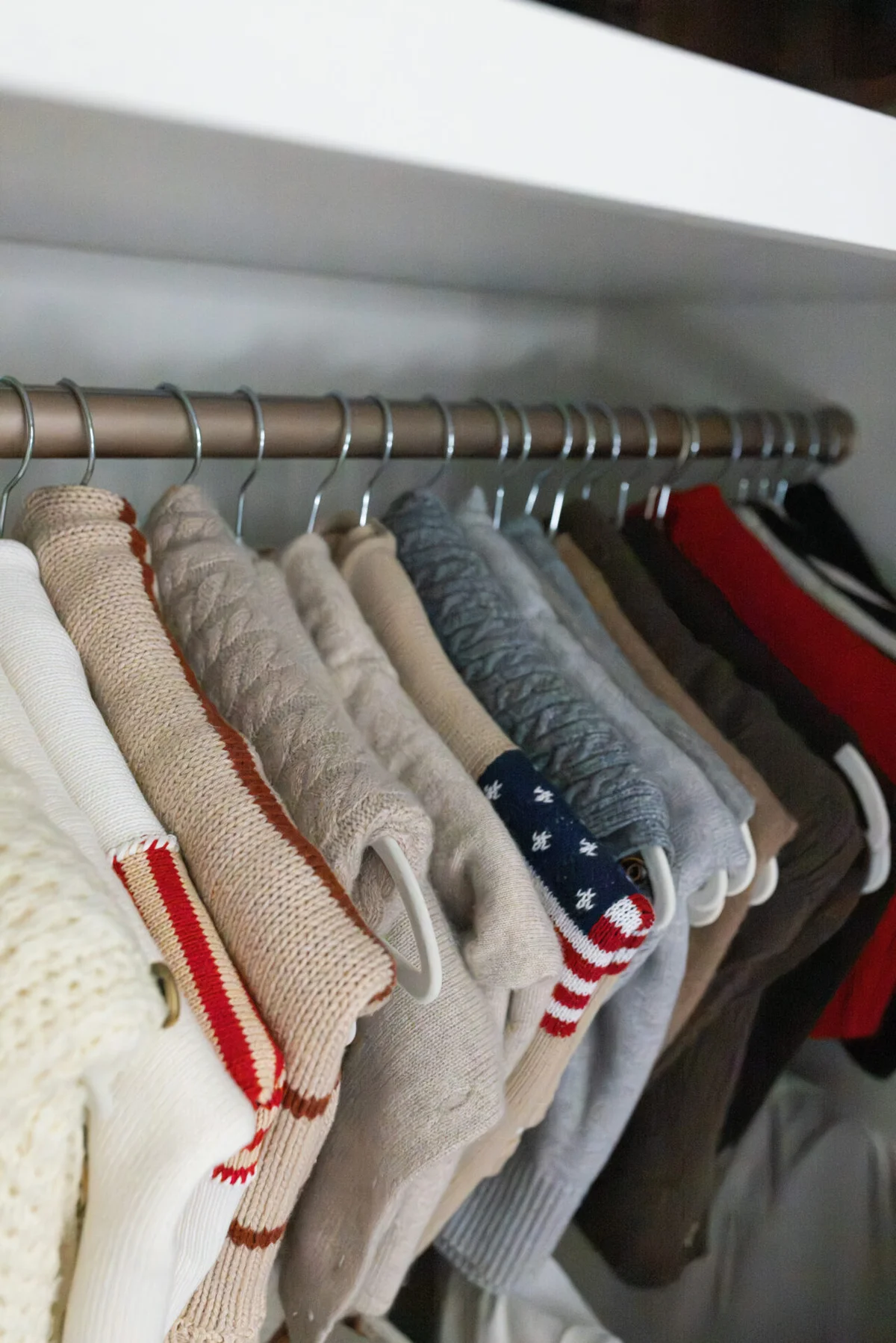
A chunkier sweater. For days when you want something more relaxed, the Frank & Eileen Montecito sweater is it. It’s thick without feeling heavy. Pair it with jeans, dress it up with trousers, throw it over your shoulders. And yes — Frank & Eileen is worth the investment. You’ll keep their pieces for years.
A cardigan. The Quince cashmere cardigan goes over everything — a tee, a dress, a tank, it doesn’t matter. Or button it all the way up and wear it as your top. I like it best with a white or gray tee peeking out, but you can wear it solo. There aren’t many rules for styling a cardigan, which is part of why it belongs in a capsule.
A dressier top for the nights that aren’t Tuesday. You need one piece that goes beyond your everyday basics. The Reformation structured top works just as well for a work dinner as it does for a date night — that’s the double duty a capsule piece is supposed to do.
Optional add: if you have room in your capsule, the Good American oversized striped tee is worth considering. It’s looser and more casual than the basic white and gray tees, a fun addition if you like some oversized pieces. It’s style-specific, so only add it if it actually fits how you dress.
Bottoms
Dark-wash straight-leg jeans. Find a pair that fits well through the hip and thigh — not overly baggy, not too tight. You want them comfortable and flattering enough that you actually want to wear them, in a classic wash without too much distressing. The Pistola Issa straight-leg jeans are my current favorites.
White jeans. Finding the best white jeans was an absolute journey for me, and the Levi’s Ribcage Straight Ankle are the holy grail. They fit beautifully, aren’t too thin, and don’t break the budget. I live in them during warmer months, and they pair just as well with neutral sweaters in the cooler ones.
A tailored trouser. Trousers are everywhere right now, and the Aritzia Effortless Pant in navy is a timeless shape at an everyday price point. Comfortable enough for everyday wear with loafers or sneakers, and they dress up with heels just as easily. One honest warning: size up one or two sizes. They run small, and you want them to fit through the hip without pulling or pinching your waist.
Denim shorts. For warmer months, denim shorts are a workhorse in a summer capsule. I’m picky about the best denim shorts, and the affordable Abercrombie High-Rise Loose Shorts are my current favorite. They give you coverage without feeling frumpy.
Chino shorts. If you want a break from denim, the Madewell Essex Utility Shorts add variety. They’re comfortable enough to wear all day and feel a little nicer — a good option for school volunteer days, running errands, or a work-from-home day that actually involves standing up.
Linen pants. Linen pants are a great alternative to shorts when you still want something cooler. I own the Aritzia Lodge linen pants in navy and chocolate brown and wear both year-round. They don’t get that weird saggy linen look after you sit for ten minutes, and they look great with all the gray, white, and striped tees in my capsule.
Dresses
A throw-on knit or T-shirt dress. A dress is underrated in a capsule because one piece is a complete outfit. For a casual everyday option, the Tuckernuck knit dress is structured and tailored. For something more relaxed, the Hill House Cosmina Nap dress feels like you’re wearing pajamas but looks nice. I wear both constantly — I’ve worn my Nap dress enough times to write it into every single one of my outfit roundups.
A nicer dress. For occasions when you want to dress up, the Sold Out NYC strapless dress will work for everything: date night, a nice dinner, even a holiday party. Pair it with sandals and a clutch in summer, or layer it with a blazer and booties when it’s cooler. If strapless isn’t your thing, the Tuckernuck line has lots of timeless options worth a look.
Layers and outerwear
A blazer. The Madewell Mercer Relaxed Blazer is the one I just added to my closet after I outgrew the previous one I’d owned for 7+ years. Navy or a neutral tone is your best bet, and a good blazer will always elevate an outfit and make people say, “Wow, you look nice.” Thanks. All I did was throw on a blazer.
A barn jacket. If you’re going to own a casual jacket, make it a barn jacket. The Lioness barn jacket beats a denim jacket because it’s more versatile and layers better — and it feels more modern. I like it over a dress for an unexpected pairing, though it works with jeans just as easily. I’m also partial to a suede bomber, but it’s not quite as versatile year-round as a barn jacket.
A denim jacket. Most people treat this as a capsule staple, but it’s not my favorite style. If I do wear a denim jacket, it’s a relaxed, oversized cut like the Free People denim jacket. I’d still pick a barn jacket over denim any day — but if you love denim jackets, absolutely include one. A capsule should reflect your taste, not just a template.
A trench. A trench works for nearly everyone’s climate for at least half the year, and like a blazer, it makes an outfit look nicer. My favorite is a traditional shape and color — the Le Bop Toby Trench or the Lauren Ralph Lauren trench both do the job.
A winter coat. This comes down to where you live and whether you want a casual or a dressier coat. For casual, I’d go for a puffer: the Aritzia Super Puff Shorty if you’re somewhere mild, or the Lands End Women’s Down Winter Coat if you get genuinely cold. For a dressier option, the Aritzia Luxe Wool Cashmere coat is my favorite — and honestly it can be dressed down too, so if you’re getting just one coat, that’s my pick.
Shoes
White sneakers. I’ve logged thousands of steps testing pairs, and the Veja Campo is the one I wear most. They’re simple, well-made, and comfortable for all-day wear — even long stroller walks. A good white sneaker is the backbone of a casual capsule.
Loafers. The Sam Edelman Lorraine loafer is my absolute favorite. They’re comfortable right out of the box and get better with age. Whether you’re running errands or getting dressed up, loafers look great with nearly every outfit in a capsule. I’ve owned and worn this exact style for 15+ years, and despite trying pricier brands, the Lorraine is always the one I go back to. That’s what a capsule staple actually looks like.
Neutral flats or ballet flats. Ballet flats cover the gap when sneakers feel too casual, loafers feel too corporate, and heels feel like too much. The Madewell Greta is minimal, elegant, and sneakily comfortable.
Sandals. This is something I typically buy new each year and wear into the ground. My most-worn sandals this year were my TKEES flip-flops, though in previous years I’ve lived in slide-type sandals like the Steve Madden Haydn. Both work, depending on your preference.
A neutral heel. This depends on your actual day-to-day. If you rarely get dressed up, go for something like the Larroude Milan Sandal, because you can wear them casually too. If you have regular dressier events, invest in a strappy heel like the Tuckernuck Scarlet instead — more elegant, but less versatile.
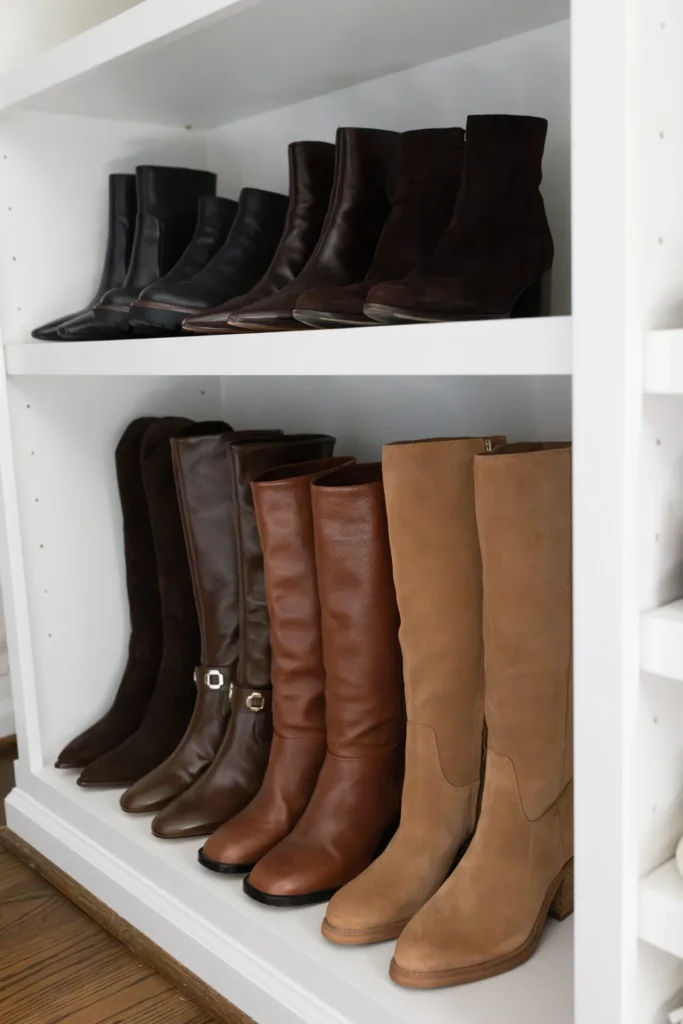
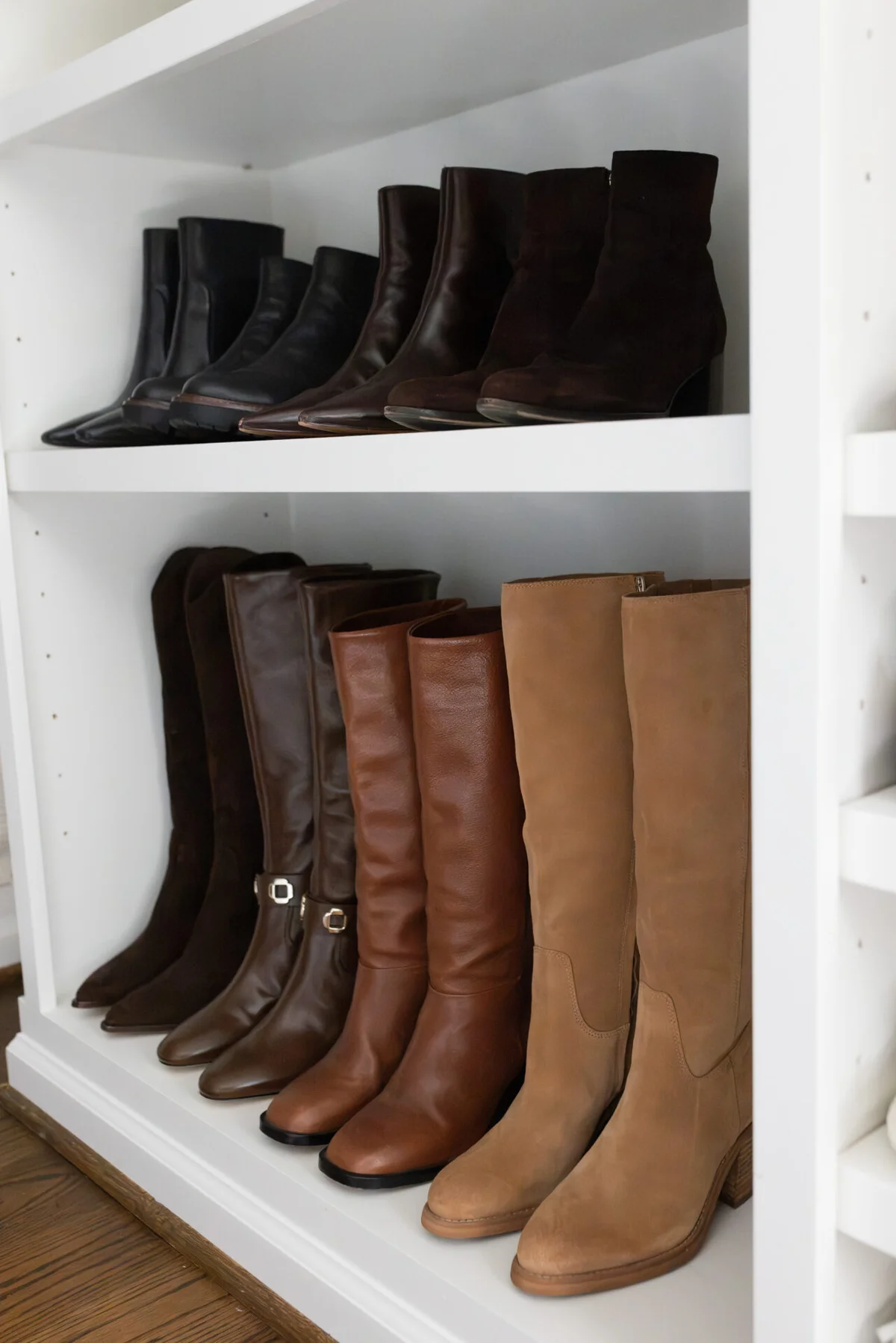
Ankle boots. The Victoria Beard black ankle boots are the holy grail of black booties — I never liked black boots until I found these, because they’re feminine, comfortable, and sleek. (I loathe Chelsea boots, full stop.) If you prefer a block heel, the Margaux Downtown Boot is my favorite. For a budget pick, I also own the Sam Edelman Saige. I wear all of these — though three ankle boots may be overkill for a true capsule.
Bags and accessories
An everyday neutral tote. The Cuyana Easy Tote is my favorite bag for a capsule. It fits everything I’m carrying — laptop, snacks, toy trucks, you know how it goes — and it works with every outfit. It’s the bag I named my personal favorite in my best-mom-purse roundup.
Gold jewelry you never take off. Keep jewelry simple in a capsule. Choose pieces that work with most outfits rather than statement pieces that compete for attention. I’m a gold person, and Mejuri is where I get the pieces I never take off.
A belt and sunglasses. I love the Quince braided belt an odd amount — it’s a little vintage but also timeless. And the Heidi Merrick sunglasses look timeless and work with any outfit. I always pack them when I travel, because I know they’re versatile enough for anywhere.
The seasonal part, in brief
Your core pieces stay the same year-round. What changes is what you add on top.
- Summer: lighter fabrics, shorter sleeves, sandals instead of boots.
- Winter: more layers, sweaters, and coats. You’re adding weight and structure to the same basics.
- Fall: the bridge season where you can wear almost anything — lighter layers, transitional pieces, the start of boots and closed-toe shoes.
And jeans — because no matter the season, finding the best jeans is foundational to everything else working.
The mistakes I keep seeing
Buying everything at once. Don’t blow your budget on a complete capsule in one shopping spree. Build it slowly. Shop your closet first, add pieces as you need them, and adjust based on what you actually wear. You’ll end up with a better capsule and save money.
Over-neutralizing because you’re scared. A capsule doesn’t mean beige and gray forever. If you love color or pattern, add it — but add pieces you’ll actually wear regularly, not one trendy item you’ll regret by next month.
Building for your aspirational life instead of your real one. Don’t build a capsule for the person you want to be or the job you want to have. Build it for the person you are right now and the life you live. It will work so much better when it reflects your actual day-to-day.
Frequently asked questions
How often should I refresh my capsule wardrobe?
A few times a year, by season. The whole point is that your pieces last — I have items I’ve worn for years. When something wears out or no longer fits, I replace it. But I’m not overhauling my entire closet every season.
What’s the difference between a capsule and a minimalist wardrobe?
A capsule is curated and intentional. Everything works together, but you still have options. A minimalist wardrobe is about owning as few pieces as possible. Both are valid — a capsule is about smart shopping, while minimalism is about owning less.
Does a capsule wardrobe work for busy parents?
Yes — it’s especially useful there. Fewer decisions in the morning, more outfits from what you already have. When everything in your closet works together, getting dressed every day stops being a negotiation.
Do I have to wear all neutrals?
No. Neutrals are a smart base because they work together, but add the colors you love. If you wear red all the time, red is your neutral. The myth that capsules have to be boring and beige is wrong — build it around colors that feel like you and that you’ll wear over and over.
How much does it cost to start a capsule wardrobe?
Less than you’d spend without a plan. Shop your closet first to see what you already have, then fill the gaps with quality pieces you’ll actually wear. You’re investing in fewer items that last longer, not buying tons of cheaper pieces you’ll replace every season. That saves money over time.
The edit
A capsule isn’t about having less. It’s about having less that works. Buy what fits your real life, wear it, and stop adding. That’s the whole system.
A note from Margot
I spent ten years editing magazine racks, telling other people which pieces were “the one.” Now I edit your closet — and I promise, you already own half of this. The other half is just the gaps you keep working around. Find them, fill them slowly, and give yourself permission to stop shopping for a while.
More on building with intention: read my guides on the cost-per-wear method and how to shop your closet first.