

Seasonal closet purge, mid-afternoon, the kind of day when you pull out the good sweaters and immediately start overthinking them. I held my favorite cashmere up to the light and did the math: if one bad wash could kill it, this piece was basically a rental, not an investment.
So I did the thing a sensible person shouldn’t do. I put it in the machine. Then I stood by the washer the entire cycle, waiting for the shrinkage to happen. It never did.
That one test changed how I handle cashmere for good — and honestly, it’s the same advice I give every client who comes in with a sweater they’re too scared to wash. Water isn’t the enemy. Heat, friction, and wringing are.

The edit: most cashmere doesn’t need a dry cleaner. It needs cool water, a gentle detergent, and twenty-four patient hours to dry flat. Everything below is what I actually do, step by step.
Check the label first (it’s not optional)
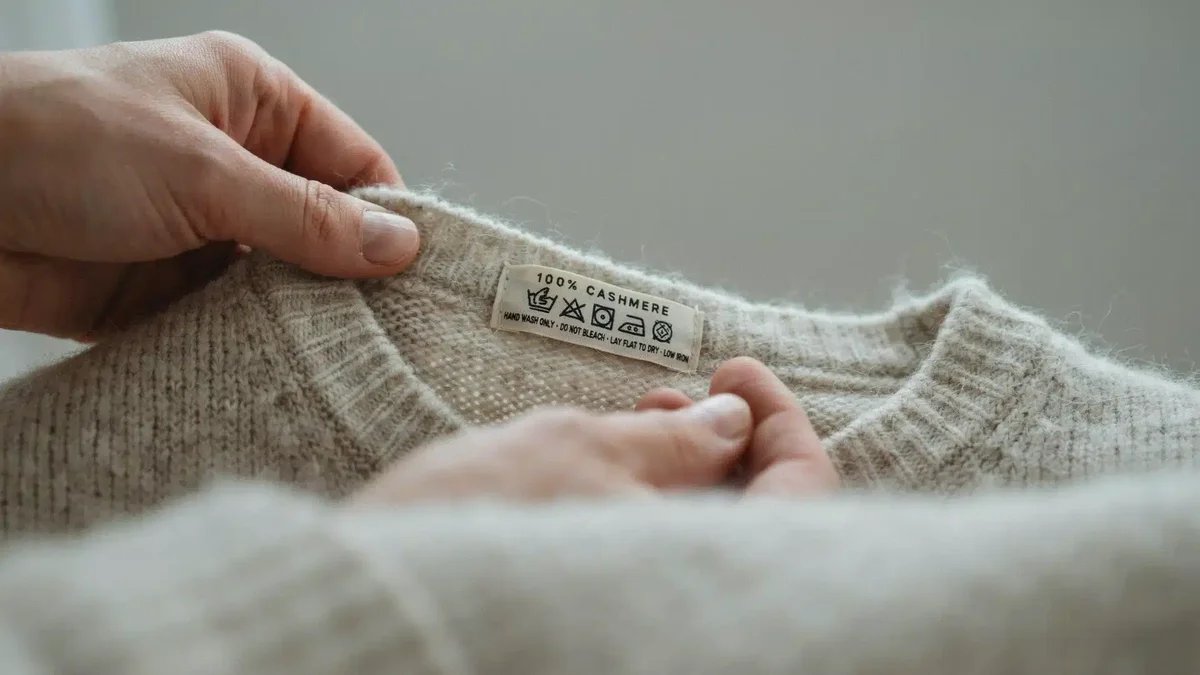
Before you pick a method, read the care label. Some pieces are marked hand wash only, some are machine-washable on a gentle cycle, and some — usually the structured ones like coats, blazers, and lined cardigans — say dry clean only. The lining and inner structure of those pieces can lose their shape once soaked, and that damage rarely reverses.
Knitted sweaters, scarves, and simple pullovers are almost always safe to wash at home, as long as the label agrees. If you’re not sure the color will hold, test a seam with a damp cloth before committing the whole piece.
How to hand-wash cashmere

Hand washing is the gentlest option, and it works for nearly every cashmere knit you own. Turn the garment inside out, then fill a sink or basin with cool or lukewarm water. Add a small amount of wool-safe detergent — baby shampoo or mild dish soap work in a pinch if you’re out.
One rule I’ve never broken: no fabric softener. It leaves a residue that makes the fibers feel less soft over time, which defeats the point of washing in the first place.
Submerge the garment and swish it gently for about thirty seconds. Don’t rub or scrub — friction on wet cashmere is one of the biggest causes of pilling. Let it soak for five to thirty minutes depending on how soiled it looks, then drain the soapy water and rinse in clean, cool water until no soap remains.
Press the water out gently with your hands. Never wring or twist. Wringing stretches the knit in a way that won’t bounce back, and trust me, you’ll notice.
Can you machine-wash cashmere? Yes — if the label says so

If the care label allows it, machine washing saves time without adding much risk. Turn the piece inside out, put it in a mesh laundry bag, and select a wool or gentle cycle on cold water with the lowest spin speed your machine offers. A small amount of wool-safe detergent goes straight into the drum.
Keep the fabric softener dispenser switched off, and only wash the sweater alongside other lightweight pieces. Jeans, towels, and anything bulky will tug at the fibers. Washing similar colors together keeps the dye from migrating, too.
A few habits from my laundry routine that make a real difference: wash cashmere after three or four wears, let it air out between uses, and give it a day of rest between wears so the fibers can recover their shape and softness.
Stains: treat them fast, keep it mild
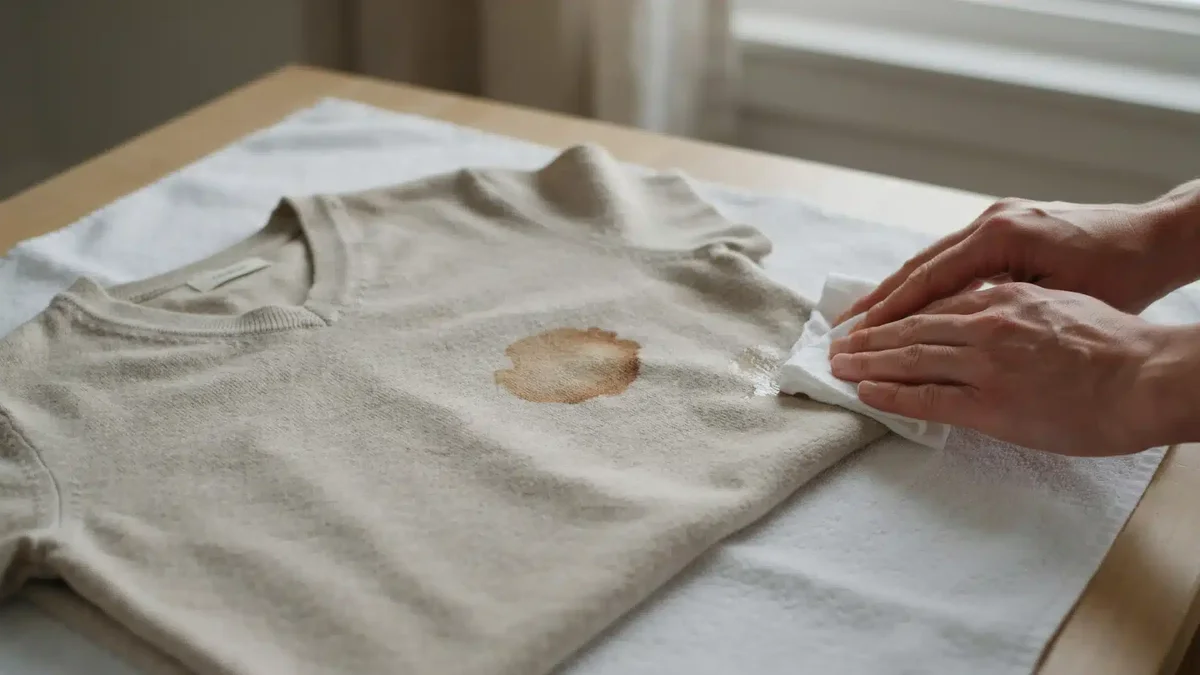
Stains happen, even with careful handling. The faster you treat them, the better the outcome. For grease or makeup, blot first, then work in a small amount of mild shampoo. Chocolate and food marks lift with a cloth dampened in liquid detergent and gentle rubbing. Red wine responds best to cold water and a little dish soap — the same approach works for tea and coffee.
One counterintuitive thing: regular laundry detergent can actually set these particular stains instead of lifting them. Keep the treatment mild, test it on an inside seam first (blends react differently), then rinse the treated area with cool water and dry the piece flat as described below.
Drying: the step that actually matters
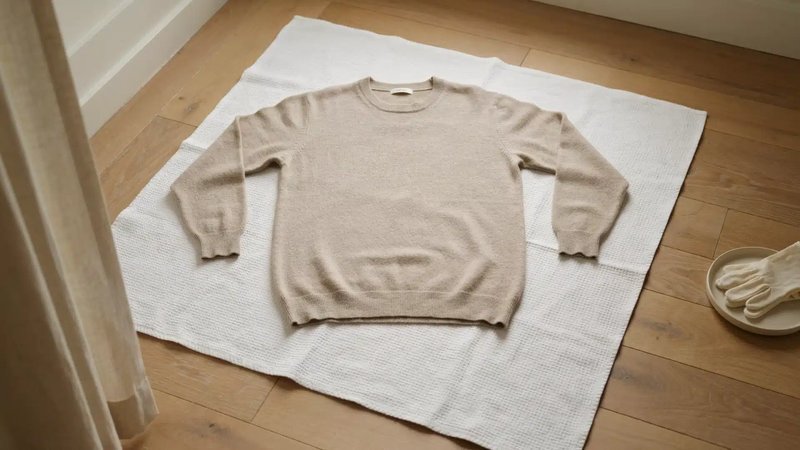
Never put cashmere in the dryer. Heat shrinks the fibers themselves and can permanently distort the knit — no amount of reshaping afterward will undo that.
Lay the garment flat across a clean, dry towel and roll the towel up with the sweater inside to press out extra water. Unroll it, reshape the sleeves, neckline, and hem by hand, then lay it flat again on a dry towel or a mesh drying rack. Keep it out of direct sunlight and away from heaters, flip it partway through so both sides dry evenly, and give it around twenty-four hours before you wear it again.
Storing it between seasons
Fold, don’t hang. A hanger stretches the shoulders and neckline out of shape over weeks and months. Store folded pieces in a breathable cotton garment bag, not plastic — plastic traps moisture and can lead to mildew. A cool, dry spot away from direct light, with a few cedar blocks or a lavender sachet nearby, keeps moths away. They’re drawn to natural fibers and any leftover body oils from wear, which is why I always wash a piece before long-term storage, even if it looks clean.
Pilling is normal. Here’s how I handle it
Small fuzzy balls are a normal part of owning cashmere — friction against bags, jewelry, and seatbelts does it, not poor quality. Once the garment is fully dry, run a cashmere comb over the surface in one direction only, never back and forth. It lifts the pills away without damaging the knit underneath. Check the high-friction spots first, and do this every few wears. The sweater stays looking fresh far longer than if you skip it.
The Edit: cool water, mild detergent, gentle hands, flat dry. That’s the whole system. The dryer is the enemy, the label is your first call, and patience — one full day of drying — is what keeps a favorite sweater soft for years.
Frequently asked questions
Does 100% cashmere shrink?
Yes. 100% cashmere shrinks easily when it meets heat, moisture, and agitation. That’s why the dryer is off the table and cold water is the default.
Is cashmere worth the care it needs?
For me, yes — but do the cost-per-wear math before you fall in love. A good piece you wear every winter for years justifies the gentle hand washing. A trendy one you’ll wear twice doesn’t, and a cheaper knit or a different fabric is the honest choice.
How do you tell if a cashmere sweater is good quality?
Stretch it gently — good cashmere springs back. It should feel dense yet soft, not overly fuzzy or slippery. That spring-back is the single most reliable tell I’ve found in ten years of looking at sweaters.
a note from Margot
I still catch myself reaching for the dry cleaner bag out of old habit. Then I remember my sink does the job just fine. Small habits, repeated each season, are what keep a favorite sweater soft for years. I spent ten years editing magazine racks. Now I edit your closet — and this is one of the habits I’d edit into every winter wardrobe.
More from the wardrobe edit: how I build a capsule winter layering system and the cost-per-wear method for buying sweaters that last.